

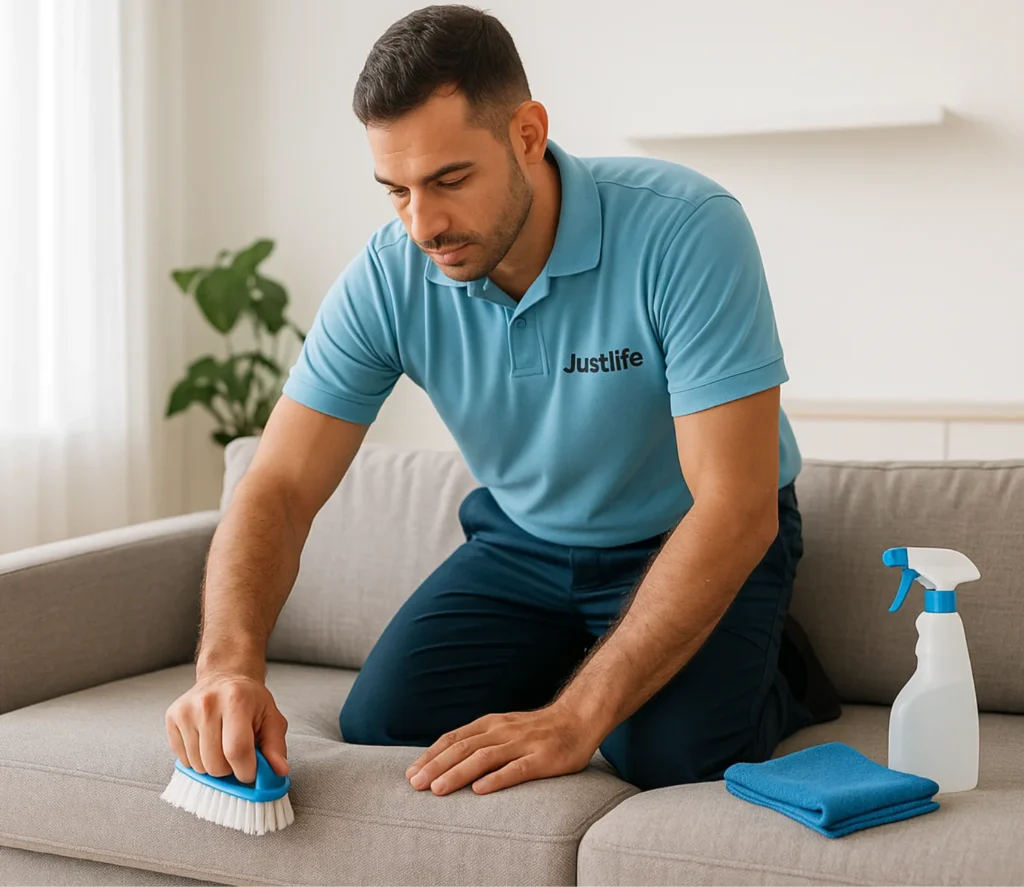
Cleaning your sofa at home is simple if done step by step: first, remove all cushions and vacuum the entire sofa thoroughly to eliminate dust, crumbs, and debris. Next, check the fabric care label to choose the right cleaning method (water-based or solvent-based), then spot-clean stains using a mild detergent mixed with water or a suitable upholstery cleaner, gently scrubbing with a soft cloth or brush.
After that, wipe the surface with a clean damp cloth to remove any soap residue, and for deeper cleaning, lightly spray a fabric-safe solution and blot dry without over-wetting. Finally, allow the sofa to air dry completely in a well-ventilated area before placing cushions back, ensuring it stays fresh, clean, and odor-free.
Understanding Your Sofa Material

Before cleaning your sofa Set, it is important to understand the type of material it is made from. Different materials require different cleaning methods, and using the wrong technique can cause damage. Fabric sofas are more absorbent and need gentle cleaning solutions, while leather sofas require special conditioners to maintain their shine. Velvet and suede sofas are delicate and should be handled carefully to avoid texture damage. Checking the sofa’s care label helps you choose the correct method and cleaning products. Understanding your sofa material ensures safe cleaning and prevents fading, shrinking, or cracking.
Types of Sofa Materials
Sofas come in a variety of materials, and each type requires a specific cleaning approach to maintain its quality. Fabric sofas are the most common and include cotton, linen, and polyester blends, which are soft but absorb stains easily. Leather sofas are durable and stylish but need regular conditioning to prevent drying and cracking. Velvet and suede sofas are more delicate, offering a luxurious feel but requiring extra care to avoid damage. Synthetic materials like microfiber are stain-resistant and easier to clean. Knowing your sofa type helps you select the safest and most effective cleaning method.
Why Material Matters in Cleaning
Understanding your sofa material is essential because using the wrong cleaning method can lead to permanent damage. For example, excess water can ruin leather and leave marks on suede, while harsh chemicals can fade fabric colors. Each material reacts differently to moisture, heat, and cleaning agents. Choosing the correct technique not only removes dirt effectively but also protects the texture and color of your sofa. Proper cleaning based on material ensures long-lasting furniture and maintains its original appearance.
How to Identify Your Sofa Material
You can identify your sofa material by checking its texture, appearance, and care label. Fabric sofas usually feel soft and woven, while leather has a smooth and slightly glossy finish. Velvet has a plush, soft surface, and suede feels like brushed leather with a matte look. Most sofas come with a care tag that includes cleaning codes such as “W” (water-based), “S” (solvent-based), or “WS” (both methods). Reading this label gives clear instructions on how to clean your sofa safely. Identifying the material correctly is the first step toward effective cleaning.
Cleaning Requirements for Different Materials
Each sofa material has unique cleaning needs that should be followed carefully. Fabric sofas can be cleaned with mild detergent and water, but they should not be over-soaked. Leather sofas require gentle wiping with a damp cloth followed by a conditioner to maintain moisture. Velvet and suede need dry cleaning methods or special brushes to protect their texture. Microfiber sofas can be cleaned using light solutions and soft cloths without much effort. Following the right cleaning method for each material helps prevent damage and keeps your sofa looking new.
Tools and Supplies You Will Need
Having the right tools and supplies makes sofa cleaning easier and more effective. A vacuum cleaner is essential for removing dust and debris from the surface and hidden corners. Microfiber cloths are ideal for wiping without scratching or leaving lint behind. Mild detergent or upholstery cleaner helps remove stains without damaging the fabric. Baking soda is useful for eliminating odors and refreshing the sofa naturally. A soft brush can be used to gently scrub stains and loosen dirt. Using proper tools ensures better cleaning results and protects your sofa from unnecessary wear.
Step-by-Step Guide to Clean Sofa at Home
Remove Loose Dust and Debris
The first step in cleaning your sofa is removing loose dirt, dust, and crumbs. Use a vacuum cleaner with a brush attachment to clean the surface thoroughly. Pay special attention to corners, seams, and areas under the cushions where dirt accumulates. Removing debris before applying any liquid cleaner prevents mud formation and makes the cleaning process easier. This step also improves the effectiveness of stain removal later. Regular vacuuming keeps your sofa looking neat and reduces allergens. It is recommended to vacuum your sofa at least once a week.
Check Cleaning Instructions
Always check the manufacturer’s cleaning instructions before applying any cleaning solution. Most sofas come with tags labeled W, S, WS, or X, indicating the suitable cleaning method. Water-based cleaners are safe for W-coded sofas, while S-coded sofas require solvent-based cleaners. WS allows both types, and X means only vacuuming is recommended. Ignoring these instructions can lead to fabric damage or discoloration. Understanding these codes ensures safe and effective cleaning. Following guidelines helps maintain the original quality and texture of your sofa.
Spot Test Before Cleaning
Before applying any cleaning solution, it is important to perform a spot test. Choose a hidden area of the sofa and apply a small amount of the cleaner. Wait for a few minutes to check for any discoloration or damage. This step helps you avoid ruining the visible parts of your sofa. Even mild cleaners can react differently with certain fabrics. A spot test gives you confidence that the cleaning method is safe. It is a simple but essential step for protecting your furniture.
Remove Stains
Stain removal requires a gentle and careful approach to avoid spreading or worsening the stain. Use a mild detergent solution or upholstery cleaner suitable for your sofa material. Apply the cleaner to a cloth and blot the stain instead of rubbing it. Rubbing can push the stain deeper into the fabric and damage the fibers. Work from the outside of the stain toward the center to prevent spreading. Repeat the process if necessary until the stain fades. Proper stain removal keeps your sofa looking clean and fresh.
Deep Cleaning the Sofa
After removing stains, the next step is deep cleaning the entire sofa. Use a suitable cleaning solution based on your sofa material and apply it evenly. Gently scrub the surface with a soft brush to remove embedded dirt and grime. Avoid using too much water, as excess moisture can damage the fabric or cause mold growth. Work in small sections to ensure thorough cleaning. Deep cleaning restores the sofa’s original look and removes hidden dirt. It is recommended to deep clean your sofa every few months.
Deodorize the Sofa
To eliminate unpleasant odors, use baking soda as a natural deodorizer. Sprinkle a thin layer of baking soda over the entire sofa surface. Let it sit for at least 15 to 30 minutes to absorb odors and moisture. Baking soda helps neutralize smells without using harsh chemicals. Afterward, vacuum the sofa again to remove the powder completely. This step leaves your sofa smelling fresh and clean. Regular deodorizing improves indoor air quality and comfort.
Dry the Sofa Properly
Proper drying is crucial after cleaning your sofa to prevent mold and unpleasant smells. Allow the sofa to air dry naturally in a well-ventilated area. Avoid using direct heat sources like hair dryers, as they can damage the fabric. Open windows or use fans to speed up the drying process. Ensure the sofa is completely dry before using it again. Moisture left in the fabric can lead to bacteria growth. Proper drying maintains the hygiene and durability of your sofa.
How to Clean Different Types of Sofas

Fabric Sofa Cleaning Tips
Fabric sofas are common and require gentle cleaning methods to avoid damage. Use water-based cleaners and avoid soaking the fabric excessively. Always blot stains instead of scrubbing to protect the fibers. Regular vacuuming helps maintain cleanliness and reduces dirt buildup. Fabric sofas can absorb odors, so deodorizing is important. Using protective covers can also extend their life. Proper care keeps fabric sofas looking new and comfortable.
Leather Sofa Cleaning Tips
Leather sofas need special care to maintain their shine and softness. Use a damp cloth to wipe dirt and avoid excessive water. Apply a leather conditioner to keep the material hydrated and prevent cracks. Avoid harsh chemicals that can damage the surface. Regular dusting helps maintain the sofa’s appearance. Keep leather sofas away from direct sunlight to prevent fading. Proper maintenance ensures long-lasting elegance and durability.
Velvet and Suede Sofa Care
Velvet and suede sofas are delicate and require careful handling. Use a soft brush to remove dust and maintain the texture. Avoid using water directly, as it can leave marks on the surface. For stains, use specialized cleaners designed for these materials. Always clean gently to avoid damaging the fabric. Regular maintenance keeps the texture smooth and attractive. Proper care preserves the luxurious look of velvet and suede sofas.
Common Sofa Cleaning Mistakes to Avoid
Many people make mistakes while cleaning sofas that can lead to damage. Using too much water is one of the most common issues, as it can cause mold and fabric damage. Scrubbing aggressively can ruin the texture and spread stains. Ignoring manufacturer instructions can result in permanent discoloration. Using harsh chemicals may weaken the fabric or leather. Skipping regular cleaning leads to heavy dirt buildup. Avoiding these mistakes helps maintain your sofa’s quality and appearance.
How Often Should You Clean Your Sofa?
Regular cleaning is essential to keep your sofa in good condition. Light cleaning, such as vacuuming, should be done weekly to remove dust and debris. Deep cleaning can be done every three to six months depending on usage. Homes with pets or children may require more frequent cleaning. Seasonal maintenance helps keep the sofa fresh and hygienic. Consistent care prevents dirt buildup and prolongs the life of your furniture. A regular cleaning schedule ensures a clean and comfortable living space.
Benefits of Cleaning Sofa at Home
Cleaning your sofa at home offers several advantages. It saves money compared to hiring professional cleaning services. Regular cleaning improves indoor hygiene and reduces allergens. It helps maintain the sofa’s appearance and extends its lifespan. Home cleaning allows you to address stains immediately. It also gives you control over the cleaning products used. Overall, it is a convenient and cost-effective way to maintain your furniture.
When to Hire Professional Sofa Cleaning Services
There are situations where professional cleaning services are necessary. Stubborn stains that do not respond to home cleaning may require expert treatment. Delicate materials like suede or antique furniture need specialized care. Heavy dirt buildup or strong odors can be difficult to remove at home. Professionals use advanced equipment and techniques for deep cleaning. Hiring experts ensures thorough and safe cleaning. It is a good option for maintaining high-value furniture.
Explore More Helpful Articles
- https://gourmetfurnisher.shop/blogs/how-to-choose-a-durable-sofa-set-for-daily-use/
- https://gourmetfurnisher.shop/blogs/latest-sofa-designs-2026/
- https://gourmetfurnisher.shop/blogs/l-shaped-sofa-vs-traditional-sofa/
Why Choose Gourmet Furnishers
Gourmet Furnishers is a trusted name when it comes to premium-quality furniture and expert care solutions. They provide high-quality sofas designed for durability, comfort, and style. Their products are crafted using top-grade materials that are easy to maintain and long-lasting. Gourmet Furnishers also offers expert guidance on cleaning and maintaining your furniture at home. Their commitment to quality ensures customers receive reliable and stylish furniture solutions. With a focus on customer satisfaction, they deliver both elegance and practicality. Choosing Gourmet Furnishers means investing in furniture that stays beautiful for years.
Conclusion
Cleaning your sofa at home is simple when you follow the right steps and use suitable tools. Regular maintenance keeps your sofa looking fresh, hygienic, and long-lasting. Understanding your sofa material helps you choose the correct cleaning method and avoid damage. By following a proper cleaning routine, you can save money and maintain a healthy living environment. Consistency is key to preserving your furniture’s quality and comfort. A clean sofa not only enhances your home’s appearance but also improves overall well-being.
FAQs
How can I clean my sofa naturally at home?
You can use baking soda and mild detergent solutions to clean your sofa naturally. These are safe and effective for removing dirt and odors.
Is it safe to use water on all sofas?
No, some sofas require solvent-based cleaning instead of water. Always check the cleaning label before using water.
How do I remove bad smells from my sofa?
Sprinkling baking soda and vacuuming it after some time helps eliminate odors effectively.
Can I use a washing machine to clean sofa covers?
Yes, if the covers are removable and machine-washable. Always follow the care instructions.
What is the best homemade sofa cleaner?
A mixture of mild detergent and warm water works well for most fabric sofas.
How long does sofa cleaning take?
Cleaning usually takes 1–2 hours, but drying may take several hours depending on ventilation.
How do I clean pet stains from my sofa?
Use an enzyme-based cleaner or mild solution and blot gently to remove stains and odors.
Can I clean a leather sofa with vinegar?
Yes, but it should be diluted and used carefully to avoid damaging the leather.
Why does my sofa smell after cleaning?
This usually happens due to excess moisture. Proper drying can prevent this issue.
How can I keep my sofa clean for longer?
Regular vacuuming, avoiding spills, and using covers help maintain cleanliness for a longer time.